Showing posts with label chrome. Show all posts
Showing posts with label chrome. Show all posts
Tuesday, March 14, 2017
EXTENSÃO MINI FAST FORWARD PARA O GOOGLE CHROME
EXTENSÃO MINI FAST FORWARD PARA O GOOGLE CHROME


Extensão que permite acelerar vídeos do YouTube sem precisar esperar o carregamento
Em vídeos armazenados localmente, no celular ou no PC, é fácil ir de um ponto a outro na linha do tempo sem precisar esperar. Em vídeos por streaming, porém, é necessário esperar que o player faça o carregamento do conteúdo em tempo real, de modo que aplicar um "fast forward" no YouTube é virtualmente impossível.
Ou talvez fosse impossível antes do lançamento da extensão MINI Fast Forward, para Google Chrome. Com esse app instalado no navegador, é possível acelerar qualquer vídeo do YouTube, Facebook ou Netflix sem precisar esperar o carregamento, podendo chegar a qualquer trecho da linha do tempo em segundos.
Após instalar a extensão, basta abrir qualquer vídeo e pressionar a tecla S do teclado para acelerar. Para voltar à velocidade normal, basta soltar a mesma tecla. O "fast forward" vai ficando mais rápido pelo tempo em que a tecla for mantida pressionada, chegando a até 8 vezes o tempo normal do vídeo, como um velocímetro no canto superior esquerdo do player indica.
Available link for download

Tuesday, January 3, 2017
Google Chrome 35 0 1916 114 Stable
Google Chrome 35 0 1916 114 Stable
 |
| Google Chrome 35.0.1916.114 Stable |
Yahoo and google Opera is a internet browser which brings together a minimal pattern along with sophisticated technological know-how for making online swifter, less hazardous, as well as easier. Yahoo and google Opera also works by using a brand new javas cript serps (V8), that is much quicker as compared to current javas cript interpreters. This implies youll be able to generate more complex and much more intensive AJAX programs along with less velocity as well as digesting difficulties. Eventually, Yahoo and google Opera was made on top of WebKit, so Yahoo and google Opera customers can enjoy the CSS3 functions staying put into WebKit since those people functions are generally released.
Link Download
===================================
Download | Google Chrome 35.0.1916.114 Stable
Available link for download
Monday, December 12, 2016
How To Save Links Into A Google Spreadsheet In Chrome
How To Save Links Into A Google Spreadsheet In Chrome
Doing Research On The Web Is One Of The Conveniences Of Our Digital Era. Information Is Easily Accessible With A Click Of A Button, And You Don’T Need To Make That Trip To Your Local Library To Pour Over Pages Of Books.
Citable Is A Perfect Solution For Heavy Research Work That Requires A Lot Of Citations From Different Sources. Getting All Citation Information Organized Into A Nice Spreadsheet Is Also A Huge Time Saver Which Cuts Down Extra Work For The Busy Researcher.
Having Google Spreadsheet As A Way To Save The Document Is Also A Great Feature, So It’S Safely Backed Up In Your Google Drive Account, And You Don’T Have To Worry About The File Getting Accidentally Deleted Or Lost.

The Challenge, However, Is Organizing Information When It’S Scattered All Over The Web. When You’Re Doing Research That’S Heavy On Citations, Simply Bookmarking Webpages May Not Be Enough For You To Track Each Source Of Information.
A Helpful Chrome Extension Called Citable Addresses This Challenge By Enabling You To Save A Website’S Link, Along With Your Notes, To A Google Spreadsheet Document.Installing And Using Citable
- Upon Installing The Extension, You Will Find A Quotation Mark Icon On The Top-Right Corner Of The Browser.
- With The Webpage That You Want To Save In The Current Tab, Click On The Icon.
- If This Is Your First Time To Use The Extension, A Google Sign Up Window Should Prompt You To Log In And Allow Access To Your Google Drive Account. This Is Where Your Saved Links Will Be Stored. Click On The “Allow” Button To Authorize The Extension.
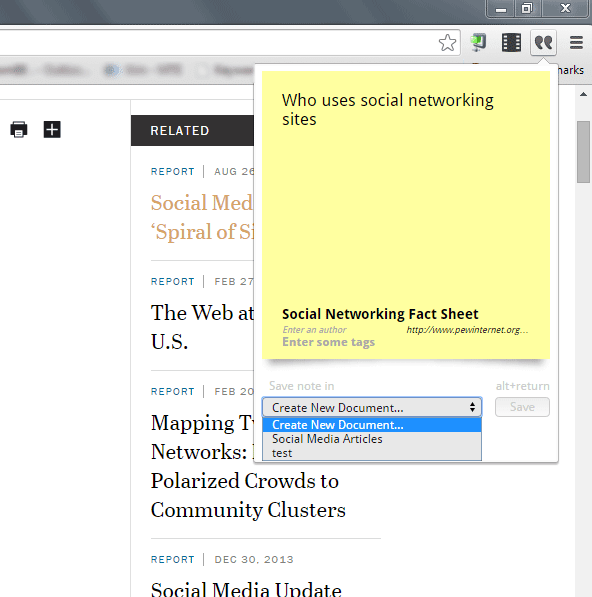
- Once You’Re Signed In To Your Google Account, You Should Now See A Drop-Down Notepad When You Click On The Quote Icon.
- In Most Cases, The Notepad Should Already Have A Current Webpage’S Information, Such As Article Title, Author And Url. If It Doesn’T Appear, You Can Add It Manually. You Can Also Add A Tag And A Summary That Will Be Included In The Google Spreadsheet.
- When Done, Click On “Create Document” On The Drop-Down List On The Bottom, And Give Your Document A Name. Click The Save Button.

- The New Document Will Be Stored As A Spreadsheet File In A Folder Called Citable On The Main Page Of Your Google Drive Account.
- Once Saved, There Should Be A Link To View The Document. Clicking The Link Will Open A New Tab And Take You Directly To The Document In Google Drive.
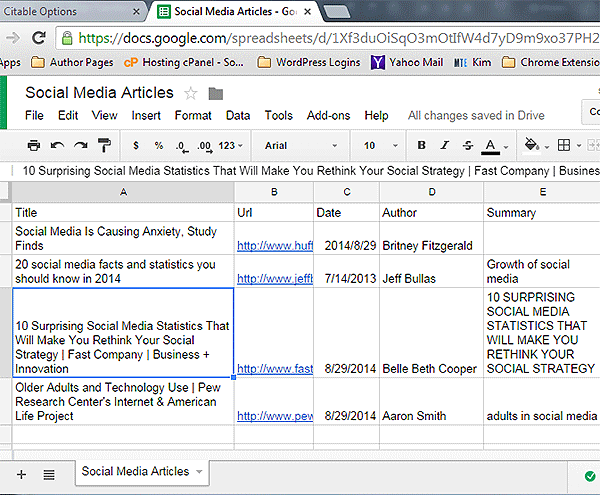
- The Spreadsheet Is Organized Into Six Columns Which Are Comprised Of The Title, Url, Date, Author, Summary And Tag Of Saved Webpages.
- Repeat The Same Process For Each Webpage You Want To Cite As Your Source.
- If You Are Researching A Different Topic, You Can Create Another Document So You Can Separate Sources Accordingly.
- New Webpages That Are Added Are Updated In The Spreadsheet In Real Time, So You See Them On The Spreadsheet As Soon As They’Re Added.
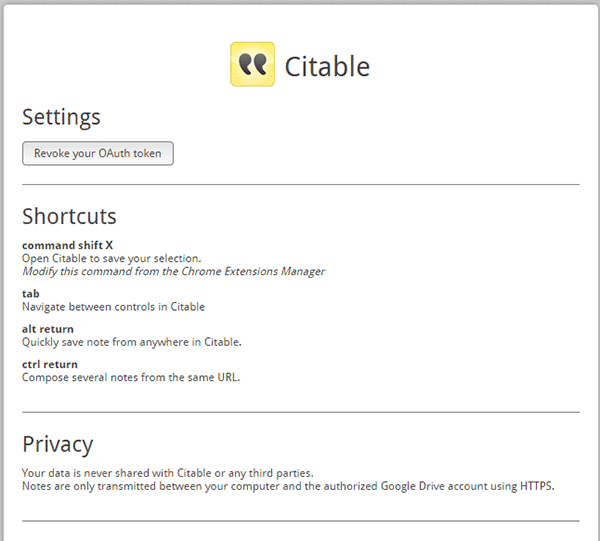
- If You Want To Learn Keyboard Shortcuts, You Can Right-Click On The Quotation Icon And Go To “Options.” You Should See Four Hotkeys For Navigating And Using The Extension.
Having Google Spreadsheet As A Way To Save The Document Is Also A Great Feature, So It’S Safely Backed Up In Your Google Drive Account, And You Don’T Have To Worry About The File Getting Accidentally Deleted Or Lost.
DOWNLOAD LINK
I Hope This Article Helps You If You Getting Any Problem Related To This Article You Can Comment By Below Comment Box We Will Help You And If You Need Any Trick Or Software Or Hack You Can Mail Us We Will Try To Give That Article We Happy To Help You All Guys.Thank You Share And Subscribe Us. #Pankaj Patidar Rock Dont Forget To Like And Follow..
Available link for download
Sunday, December 11, 2016
Google Chrome Free Download
Google Chrome Free Download


Google Chrome
It is a freeware web browser developed by Google. It used the WebKit layout engine until version 27 and, with the exception of its iOS releases, from version 28 and beyond uses the WebKit fork Blink. It was first released as a beta versionfor Microsoft Windows on September 2, 2008, and as a stable public release on December 11, 2008.
As of January 2015, StatCounter estimates that Google Chrome has a 51% worldwide usage share of web browsers as a desktop browser. It is also the most popular browser on all the other platforms it supports, mobile, tablets (except for the iPad where the Safari browser is preinstalled, and because of that popularity Safari is most popular on all tablets combined) or any combinations of platforms, such as mobile plus tablets.
Google releases the majority of Chromes source code as an open-source project Chromium. A notable component that is not open source is the built-in Adobe Flash Player.
History
Google CEO Eric Schmidt opposed the development of an independent web browser for six years. He stated that "at the time, Google was a small company," and he did not want to go through "bruising browser wars." After co-founders Sergey Brin and Larry Page hired several Mozilla Firefox developers and built a demonstration of Chrome, Schmidt admitted that "It was so good that it essentially forced me to change my mind.
Announcement
The release announcement was originally scheduled for September 3, 2008, and a comic by Scott McCloud was to be sent to journalists and bloggers explaining the features within the new browser. Copies intended for Europe were shipped early and German blogger Philipp Lenssen of Google Blogoscopedmade a scanned copy of the 38-page comic available on his website after receiving it on September 1, 2008. Google subsequently made the comic available on Google Books and mentioned it on their official blog along with an explanation for the early release.
Public release
An early version of Chromium for Linux, explaining the difference between Chrome and Chromium
The browser was first publicly released for Microsoft Windows (XP and later versions) on September 2, 2008 in 43 languages, officially a beta version.
On the same day, a CNET news item drew attention to a passage in the Terms of Service statement for the initial beta release, which seemed to grant to Google a license to all content transferred via the Chrome browser. This passage was inherited from the general Google terms of service. Google responded to this criticism immediately by stating that the language used was borrowed from other products, and removed this passage from the Terms of Service.
Chrome quickly gained about 1% usage share. After the initial surge, usage share dropped until it hit a low of 0.69% in October 2008. It then started rising again and by December 2008, Chrome again passed the 1% threshold.
In early January 2009, CNET reported that Google planned to release versions of Chrome for OS X and Linux in the first half of the year. The first official Chrome OS X and Linux developer previews were announced on June 4, 2009 with a blog postsaying they were missing many features and were intended for early feedback rather than general use.
In December 2009, Google released beta versions of Chrome for OS X and Linux. Google Chrome 5.0, announced on May 25, 2010, was the first stable release to support all three platforms.
Chrome was one of the twelve browsers offered to European Economic Area users of Microsoft Windows in 2010.
Development
Chrome was assembled from 25 different code libraries from Google and third parties such as Mozillas Netscape Portable Runtime, Network Security Services, NPAPI, Skia Graphics Engine, SQLite, and a number of other open-source projects.[38] The V8 JavaScript virtual machine was considered a sufficiently important project to be split off (as wasAdobe/Mozillas Tamarin) and handled by a separate team in Denmark coordinated by Lars Bak at Aarhus. According to Google, existing implementations were designed "for small programs, where the performance and interactivity of the system werent that important", but web applications such as Gmail "are using the web browser to the fullest when it comes to DOM manipulations and JavaScript", and therefore would significantly benefit from a JavaScript engine that could work faster.
Chrome uses the Blink rendering engine to display web pages. Based on WebKit, Blink only uses WebKits "WebCore" components while substituting all other components, such as its own multi-process architecture in place of WebKits native implementation.
Chrome is internally tested with unit testing, "automated user interface testing of scripted user actions", fuzz testing, as well as WebKits layout tests (99% of which Chrome is claimed to have passed), and against commonly accessed websites inside the Google index within 20–30 minutes.
Google created Gears for Chrome, which added features for web developers typically relating to the building of web applications, including offline support. Google phased out Gears as the same functionality became available in the HTML5 standards.
On January 11, 2011, the Chrome product manager, Mike Jazayeri, announced that Chrome would remove H.264 video codec support for its HTML5 player, citing the desire to bring Google Chrome more in line with the currently available open codecs available in the Chromium project, which Chrome is based on.[41] Despite this, on November 6, 2012, Google released a version of Chrome on Windows which added hardware-accelerated H.264 video decoding. In October 2013, Cisco announced that it was open-sourcing its H.264 codecs and will cover all fees required.
On February 7, 2012, Google launched Google Chrome Beta for Android 4.0 devices. On many new devices with Android 4.1 and later preinstalled, Chrome is the default browser.
On April 3, 2013, Google announced that it would fork the WebCore component of WebKit to form its own layout engine known as Blink. The aim of Blink will be to give Chromes developers more freedom in implementing its own changes to the engine, and to allow its codebase to be trimmed of code that is unnecessary or unimplemented by Chrome.
Release history
Features
Google Chrome features a minimalistic user interface, with its user-interface principles later being implemented into other browsers. For example, the merging of the address barand search bar into the omnibox. Chrome also has a reputation for strong browser performance.
Bookmarks and settings synchronisation
Chrome allows users to synchronize their bookmarks, history, and settings across all devices with the browser installed by sending and receiving data through a chosen Google Account, which in turn updates all signed-in instances of Chrome. This can be authenticated either through Google credentials, or a sync passphrase.
Web standards support
The results of the Acid3 test on Google Chrome 4.0
The first release of Google Chrome passed both the Acid1 and Acid2 tests. Beginning with version 4.0, Chrome has passed all aspects of the Acid3 test.
As of May 2011, Chrome has very good support for JavaScript/ECMAScript according to Ecma Internationals ECMAScript standards conformance Test 262 (version ES5.1 of 2012-05-18). This test reports as the final score the number of tests a browser failed; hence lower scores are better. In this test, Chrome version 37 scored 10 failed/11578 passed. For comparison, Firefox 19 scored 193 failed/11752 passed and Internet Explorer 9 has a score of 600+ failed, while Internet Explorer 10 has a score of 7 failed.
In 2011 on the official CSS 2.1 test suite by standardization organization W3C, WebKit, the Chrome rendering engine, passes 89.75% (89.38% out of 99.59% covered) CSS 2.1 tests.
On the HTML5 web standards test, Chrome 41 scores 518 out of 555 points, placing it ahead of the five most popular desktop browsers. Chrome 41 on Android scores 510 out of 555 points.
Security
Chrome periodically retrieves updates of two blacklists (one for phishing and one for malware), and warns users when they attempt to visit a site flagged as potentially harmful. This service is also made available for use by others via a free public API called "Google Safe Browsing API".
Chrome uses a process-allocation model to sandbox tabs. Using the principle of least privilege, each tab process cannot interact with critical memory functions (e.g. OS memory, user files) or other tab processes — similar to Microsofts "Protected Mode" used by Internet Explorer 9 or greater. The Sandbox Team is said to have "taken this existing process boundary and made it into a jail." This enforces a computer security model whereby there are two levels of multilevel security (user and sandbox) and the sandbox can only respond to communication requests initiated by the user. On Linux sandbox uses the compose mode.
Since 2008, Chrome has been faulted for not including a master password to prevent casual access to a users passwords. Chrome developers have indicated that a master password does not provide real security against determined hackers and have refused to implement one. Bugs filed on this issue have been marked "WontFix". As of Feb 2014, the Windows version asks the user to enter the Windows account password before showing saved passwords.
In January 2015, TorrentFreak reported that using Chrome when connected to the internet using a VPN can be a serious security issue due to the browsers support for Web RTC.
Security vulnerabilities
No security vulnerabilities in Chrome were exploited in the three years of Pwn2Own from 2009–2011.
At Pwn2Own 2012, Chrome was defeated by a French team who used zero day exploits in the version of Flash shipped with Chrome to take complete control of a fully patched 64-bit Windows 7 PC using a booby-trapped website that overcame Chromes sandboxing.
Available link for download
Monday, November 21, 2016
How To Speed Up Google Chrome Browser
How To Speed Up Google Chrome Browser
Google chrome is one of the fastest internet browser.Google Chrome really works faster and smoother compared to other internet browser. Google Chrome uses DNS prefetching and speedy (SPDY) protocols instead of simply using HTTP. These DNS prefetching and SPDY protocols load up your page in advance so that you need not to wait for more time.
But It happens many times that Google Chrome starts working very slow and believe me that is very frustrating Or irritated. But you need not to worry any more because we get some new tricks to speed up chrome browser easily.
These Extensions really slows up your browser and can affect your browsing speed very badly.
1.Open your chrome browser and type the following address in the address bar.
 2. You will now going to see an extensions list which is supporting your browser.
3. Simply unchecked the extensions which are not needed or just delete those extensions which are not needed in future.
You will surely see some changes in your browsing speed as you delete those extensions from your browser.
Although cached and cookies are really made to speed up chrome browser but sometimes it happens that they are responsible for decreasing your browsing speed and lagging.
2. Choose Tools > Clear browsing data.
3. Simply, choose the time range and other types of extra features which are listed below in that dialog box, hit Clear browsing data.
That’s all. I Hope you this post will some what help you clear your question how to speed~up Google Chrome browser ? if you face any type of problem or confusion after reading this post you can surely leave a comment below in the comment box.
But It happens many times that Google Chrome starts working very slow and believe me that is very frustrating Or irritated. But you need not to worry any more because we get some new tricks to speed up chrome browser easily.
How To Make Google Chrome Faster
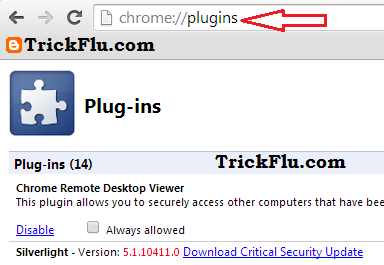
1.Disable Plugins
Remove Unwanted plugins from your Google Chrome which helps you to make your Google Chrome work faster and smooth.Plugins slow up your browsing speed.Follow Steps -:
- Open your chrome browser and go to the following address.~~> chrome://plugins/ <~~
- Uncheck the plugins which are not in your use. You can also delete these plugins unwanted plugins. Understand that you may not be able to delete or uninstall these plugins,you can only disable them.
2.Disable Extensions
You might wonder if Plugins and extensions are almost similar to each other.Plugins are usually a third party programs which are needed to enhance the speed and performance of your browser but other than this extensions are specifically needed for browsers.These Extensions really slows up your browser and can affect your browsing speed very badly.
1.Open your chrome browser and type the following address in the address bar.
~~> chrome://extensions/ <~~
3. Simply unchecked the extensions which are not needed or just delete those extensions which are not needed in future.
You will surely see some changes in your browsing speed as you delete those extensions from your browser.
3. Clear Browsing Data
You already know that if you browse any website, chrome automatically collects the cached text, cookies and other kinds of website data. That is why when we click again on that website address it consumes less time for loading that web page.Although cached and cookies are really made to speed up chrome browser but sometimes it happens that they are responsible for decreasing your browsing speed and lagging.
Follow Steps To Clear Browsing Data ~
1. Click on Control And Customize chrome button or Wrench icon.2. Choose Tools > Clear browsing data.
3. Simply, choose the time range and other types of extra features which are listed below in that dialog box, hit Clear browsing data.
That’s all. I Hope you this post will some what help you clear your question how to speed~up Google Chrome browser ? if you face any type of problem or confusion after reading this post you can surely leave a comment below in the comment box.
Dont Forget To Like And Follow..
Available link for download
Thursday, November 3, 2016
How To Save WebPage To PDF In Google Chrome
How To Save WebPage To PDF In Google Chrome
Steps To Follow :
- Open The Webpage You Want To Save In PDF.
- Once The WebPage Load Completely.
For Windows User : Press [ CTRL+ P ]
For Mac User : [ COMMAND + P ] - The Print Options Page Will Appear On Your Screen. You Can Setup Your PDF According To Your Preferred Choice For Saving. [ Destination, Pages Etc ].
- Simplify Your Page Options Via The Simplify Page Options Tab. [ You Can Choose To Remove All Distractions From Your Webpage ]
- Click On Save And Your Entire Page Save In PDF.
I Hope This Article Helps You If You Getting Any Problem Related To This Article You Can Comment By Below Comment Box We Will Help You And If You Need Any Trick Or Software Or Hack You Can Mail Us We Will Try To Give That Article We Happy To Help You All Guys.Thank You Share And Subscribe Us. #PankajPatidar
Dont Forget To Like And Follow..
Available link for download
Sunday, September 18, 2016
google chrome download free
google chrome download free

it is neat and clean, provide a simple interface. the user interface is simple to use and user friendly. it is designed to keep user more secure in web. the malware and phishing protection is built-in in the browser. auto up-date ensure to fix latest security problems and much more.
The privacy is very well. it protect your information, which you are shearing online.
there are many ways to customize the it, easy access to sittings, add apps, extensions and apply different themes for better look. all this you can get from googles store.
it brings all settings related to bookmarks, history etc.
once signing in it also automatically sign user in to all google services.
the google chrome is available for Mac, iPhone, Nokia, windows phones, blackberry, android and Chromebooks.
Download now for free and safely!
Download google chrome Download for Mac
You may like chrome cleanup tool
Available link for download
Thursday, September 15, 2016
Instant Translate Add Ons Baru Untuk Terjemahkan Bahasa di Browser Firefox Chrome dan Edge
Instant Translate Add Ons Baru Untuk Terjemahkan Bahasa di Browser Firefox Chrome dan Edge
Ketika google translate dan bing translate menjadi andalan bagi pengguna internet di seluruh dunia untuk menerjemahkan kata maupun kalimat tertentu secara online. Untuk kalian pengguna browser Chrome, Mozilla dan Edge, saat ini kalian dapat memanfaatkan add ons terbaru untuk membantu menerjemahkan kata bahasa asing yang belum kamu ketahui artinya melalui instant translate.
Instant translate merupakan add ons yang dapat kita unduh secara gratis untuk beberapa browser favorit anda. Instant translate ini menyajikan keunggulan yakni kemampuan untuk menerjemahkan lebih dari 100 bahasa. Pada penggunaannya sangatlah sederhana kita hanya tinggal menuliskan atau mengucapkan sebuah kata tertentu, maka secara otomatis instant translate akan memberikan pengertian dari kata yang kita tulis
Fitur dan Cara Mengaktifkan Double Click Translation
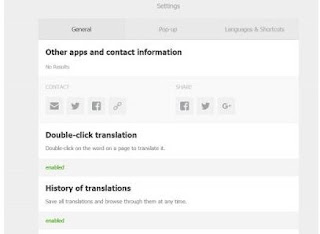
Bukan hanya melalui perintah ketik manual atau suara, instant translate juga menyediakan fitur double click translation. Fitur double click translation ini, sangat memudahkan kita untuk mengartikan kata tertentu dengan double klik pada kata yang kita ingin ketahui artinya. Untuk dapat mengaktifkan fitur double click ini kita cukup mengaturnya melalui menu tab general pada pengaturan
Melalui tab general ini juga telah tersedia link berbagi yang dapat kita lanjutkan ke beberapa jejaring sosial favorit kita seperti facebook, twitter dan google plus.
Mengaktifkan Fitur Smart Translation
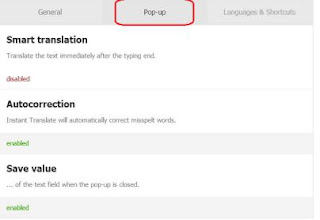
Masih pada pengaturan, pada tab pop up, kita dapat mengaktfikan fitur smart translation. Mengakifkan fitur smart translate akan mempercepat proses penerjemahan suatu kata pada saat kita selesai mengetikan kata tertentu. Pada tab pop ini kita juga dapat mengaktifkan fitur auto correction terhadap kata terjemahan yang kita pilih.
Pengaturan Bahasa

Fitur pengaturan bahasa dan shortcut merupakan pengaturan terpenting pada aplikasi ini. Pada menu ini kita dapat menentukan bahasa apa yang akan kita tentukan. Seperti gambar di bawah ini saya mensetting aplikasi ini dari bahasa inggris ke bahasa albania. Kita tentu dapat mengubah bahasa apa yang kita inginkan dengan mengaturnya melalui menu source language dan destination language. Untuk memilihnya pun sangatlah mudah, kita hanya tinggal menggulung menu pilihan bahasa yang kamu inginkan.
Proses Menerjemahkan

Setelah menginstall dan melakukan beberapa pengaturan pada add ons insta translate pada browser favorit kamu. Kini ada dua cara mudah bagi kamu yang ingin menerjemahkan kata tertentu melalui add ons ini
Pertama, kita hanya tinggal menentukan kata asing yang ingin kita ketahui artinya dengan cara menyoroti langsung atau melakukan double klik pada kata tersebut
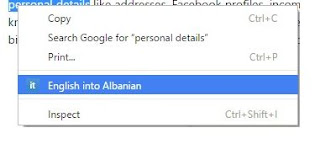
Kedua, kita dapat menerjemahkan kata tertentu hanya dengan klik kanan, pada kata yang ingin kita ketahui artinya. Untuk kamu yang ingin mengunduh add ons instant translate di browser favorit kamu. Kalian dapat memperolehnya melalui link berikut ini
Unduh Add Ons Instant Translate
Available link for download
Subscribe to:
Posts (Atom)